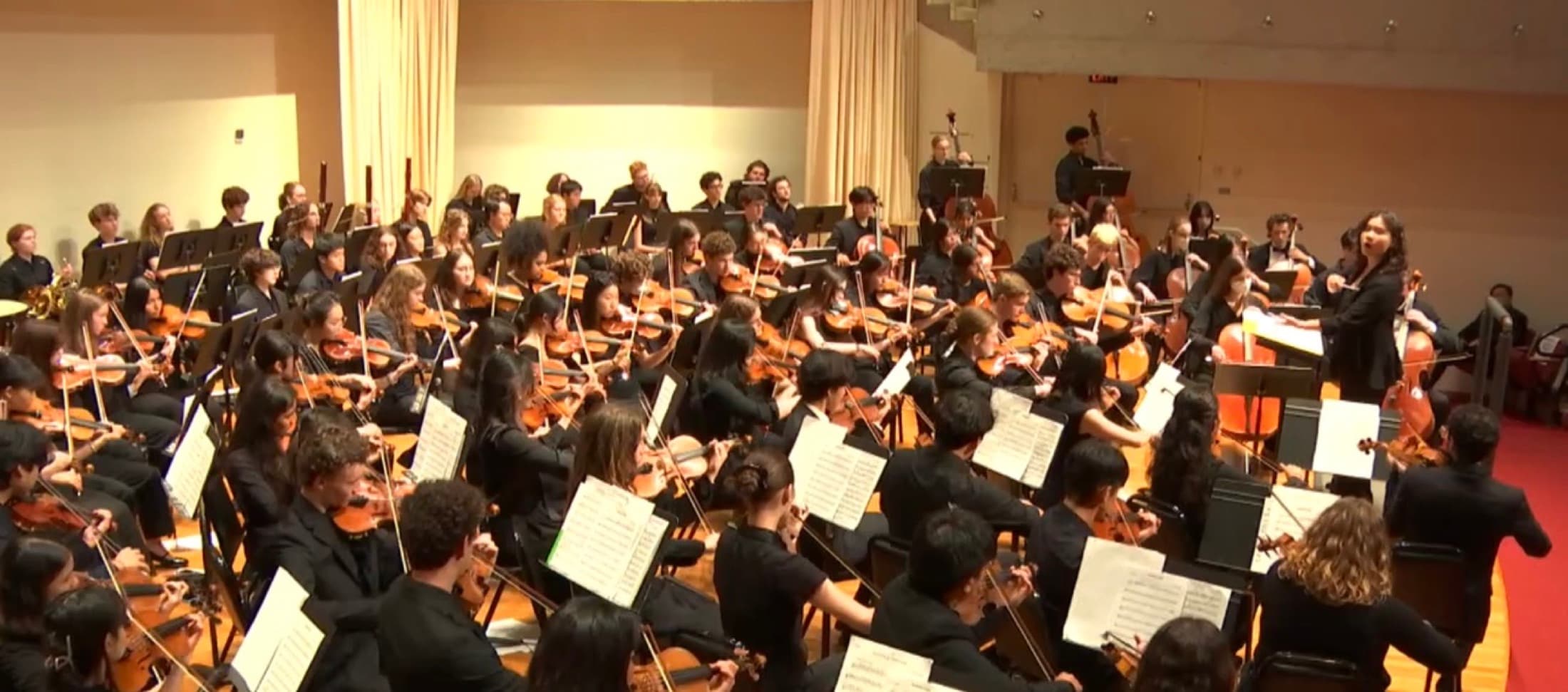
I did not arrive at Amherst College expecting to become a professional musician. I had played piano since childhood, sung in choirs, and joined my high-school band through hurried lessons in percussion. I also carried around musical ideas and a patchwork understanding of theory. Music mattered to me, but it was still something I did—not yet a future I knew how to imagine.
Piano is the longest and most complicated thread in that story. I began before I was five, but most of my training in China centered on solo repertoire and access to good teaching was uneven. I learned persistence and a great deal of music, but not always how to practice well. What kept the instrument alive for me was playing with other people: accompanying my middle-school choir, then playing for musical theatre and band after I moved to Tennessee. As an adult, I returned to serious study with Hiromi Fukuda and Ana María Otamendi and began rebuilding both my technique and my relationship with the piano.
At Amherst, the Music Department gave me room to enter from wherever I was. I studied theory, history, and ethnomusicology; composed; sang; played percussion, piano, and later viola; assisted choral and orchestral rehearsals; and kept saying yes before I was sure I was ready. For a while, these looked like unrelated interests. Conducting was where they began to make sense together.
My senior thesis made that choice real. I wrote Requiem: Ceaseless Life, a fifty-minute choral-orchestral work, invited 41 musicians individually, organized the rehearsals, and conducted the premiere. I had to understand the score as its composer, explain it as a conductor, and persuade a large group of people to build it with me. When the performance happened, it was the clearest proof I had that I could create a musical project—not only imagine one.
I was not ready to leave Amherst after graduation. The pandemic had taken away much of the ensemble life I had hoped for in college, and I wanted both more time to prepare for music school and a chance to give something back. I stayed for a year as a Graduate Associate in Music, teaching ear training, assisting ensembles, working in the concert office, scheduling auditions, and doing the ordinary work that kept the department running. By the end of that year, Professor Eric Sawyer described me as “the heart and soul of the department.” I had entered Amherst unsure whether I belonged in music and left after helping to hold a musical community together.
The move to the University of Michigan was difficult. Amherst had encouraged breadth, initiative, and learning by doing; conservatory training demanded consistency, speed, and technical habits I was still building. The gaps I had once been able to work around became impossible to ignore. That was painful, but useful. At Michigan, I am learning to turn instinct into method: how to study a score, rehearse efficiently, use my body clearly, listen with purpose, and improve deliberately. My continued work in voice and collaborative piano is part of the same process.
I entered music later and less directly than many of my colleagues. I cannot change that, and I no longer want to organize my life around catching up. This path gave me breadth, resourcefulness, and an unusual comfort moving between musical roles. I am still becoming the musician I want to be, but I now know that this is the work I choose.